


Having a hair transplant is only one part of the hair restoration process. What happens after the procedure matters too, from caring for your scalp in the first few days to knowing when you can return to your usual activities and what to expect as new hair growth develops.
While your hair transplant doctor will provide personalised hair transplant post op instructions, understanding the general stages of hair transplant recovery can help you prepare for the weeks and months ahead.
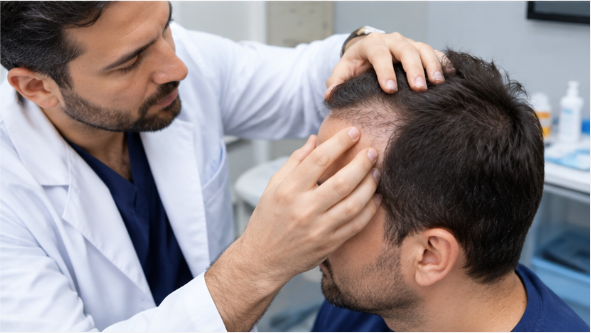

The First 24 Hours After Your Hair Transplant
The first day is mainly about protecting the treated areas and giving your scalp time to settle.
You may experience some redness, tenderness, tightness or mild swelling following the hair transplant procedure. Small areas of bleeding or fluid may also occur around the treated sites. Your clinic will explain what is expected and how to care for your scalp during this initial period.
The transplanted grafts are particularly delicate immediately after the procedure, so avoid touching, rubbing or scratching the treated area unless your doctor has specifically instructed you to do so.
You will also be given instructions about when and how to wash your scalp, what products to use and when you can return to your usual haircare routine. These instructions can vary depending on the procedure and your individual recovery.
Looking After Your Scalp During the First Few Days
The early stages of hair transplant healing are about allowing the scalp to recover without putting unnecessary pressure or friction on the treated areas.
Follow the instructions provided by your hair transplant doctor, particularly when it comes to washing your hair. You may be asked to wash the scalp gently and avoid rubbing the transplanted area while it heals.
It is also important to avoid picking at any crusts or scabs that develop. Although they can be tempting to remove, allowing them to come away naturally can help avoid unnecessary irritation to the healing scalp.
During this period, you may also need to modify some of your usual activities, including exercise and activities that cause significant sweating.
How Should You Sleep After a Hair Transplant?
Sleeping can require a little extra care during the first few nights.
Your doctor may recommend sleeping with your head elevated and avoiding direct pressure on the transplanted area. This can also help if you experience swelling during the early stages of recovery.
Try to avoid sleeping in a position where the treated area is pressed against the pillow. Your clinic will let you know when you can return to your usual sleeping position.
A clean pillowcase can also help keep the healing scalp clean. You may wish to use a soft pillowcase that does not create unnecessary friction, particularly while the scalp remains sensitive.
When Can You Return to Your Normal Routine?
The time it takes to return to your usual activities varies depending on the procedure and your individual recovery. Your clinic will provide specific guidance, but you may need to take some precautions during the early stages.
Work
Many people can return to work relatively soon after a hair transplant, particularly if their work is not physically demanding. However, you may have some visible redness or swelling during the first few days.
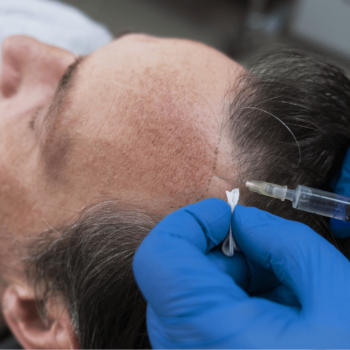
If your work involves physical exertion, dust, heat or other factors that may affect your scalp, you may need to allow more time before returning.
Exercise
Strenuous exercise can increase sweating and blood flow, so your doctor may recommend avoiding it for a period following the procedure. The exact timeframe will depend on your treatment and recovery.
Gentle everyday movement may be possible sooner, but follow the specific instructions provided by your treating team.
Swimming
Swimming pools, spas and other bodies of water may need to be avoided during the early healing period. Your scalp needs time to recover, and your doctor can tell you when it is appropriate to return to swimming.
Hats and Helmets
Whether you can wear a hat immediately after your procedure depends on the type of hat, how it sits on the scalp and your doctor’s instructions. Anything that puts pressure or friction on the transplanted area may need to be avoided initially.
Helmets may require a longer break because they fit closely against the scalp.
Haircuts and Styling
Your doctor will let you know when it is appropriate to have your first haircut following treatment. You may also need to avoid certain styling products or techniques while the scalp is healing.
Understanding the Hair Transplant Healing Process
Recovery does not finish once the initial redness and tenderness have settled. The transplanted follicles go through a longer process before new hair growth becomes visible.
During the first few weeks, the scalp gradually heals and the transplanted hairs may shed. This can be an expected part of the process and does not necessarily mean the transplant has failed.
Over the following months, the follicles move through their natural growth cycle and new hair begins to develop. The new hairs may initially be fine before gradually becoming thicker and more noticeable.
The timing varies between individuals, but hair growth is generally gradual rather than immediate. It can take several months before changes become noticeable, with further maturation continuing over the following months.
Changes You May Notice During Recovery
Knowing what can happen during hair transplant recovery can help you distinguish between expected changes and symptoms that should be discussed with your clinic.
● Redness and tenderness can occur around the treated areas during the early healing period. These generally settle as the scalp recovers.
● Swelling may develop around the scalp or forehead following the procedure. Your doctor can provide advice on how to manage this and when you should expect it to improve.
● Scabbing and itching can occur as small areas of the scalp heal. It is important not to pick or scratch these areas, as doing so can irritate the scalp.
● Temporary shedding of transplanted hairs can also occur. The visible hair may shed while the follicle remains in place and enters another stage of its growth cycle.
If you experience increasing pain, significant swelling, persistent bleeding, signs of infection, fever or anything that concerns you, contact your treating doctor or clinic for advice rather than trying to manage the problem yourself.
When Can You Expect Your New Hair to Grow?
One of the most important things to understand about a hair transplant is that the growth process takes time.
The early period is focused on healing rather than visible hair growth. After the initial shedding phase, new hair may begin to appear gradually.
A general timeline may look like this:
● First few weeks: The scalp heals and transplanted hairs may shed.
● Around three to four months: Early new growth may become visible.
● Around six months: Growth may become more noticeable as the new hairs develop.
● Around nine to twelve months: Increasing density and maturation may be seen.
● Beyond twelve months: Some transplanted hair may continue to mature and change in appearance.
These timeframes are only a general guide. Hair growth varies between individuals, and your doctor can give you a more personalised indication based on your procedure and circumstances.
Your Hair Transplant Aftercare Matters Beyond the First Few Weeks
Once the scalp has healed, you can generally begin returning to your normal haircare routine according to your doctor’s advice. However, looking after your scalp remains important beyond the initial recovery period.
Follow any ongoing recommendations provided by your clinic and take care when introducing new products or treatments to the scalp.
It is also worth remembering that a hair transplant moves hair follicles into areas affected by hair loss; it does not necessarily stop hair loss from continuing elsewhere on the scalp. Your doctor may discuss other treatment options if you are experiencing ongoing thinning of your non-transplanted hair.
How Can You Support Your Recovery?
There is no need to overcomplicate your recovery. The most important thing is to follow the instructions provided by your treating team and give your scalp time to heal.
During the early stages:
● Follow your hair transplant post op instructions carefully.
● Avoid touching, rubbing or scratching the treated area.
● Wash your scalp only as directed by your doctor.
● Avoid strenuous exercise until you have been cleared to resume it.
● Protect the scalp from unnecessary sun exposure.
● Avoid pressure or friction from hats and helmets until advised that they are suitable.
● Attend any recommended follow-up appointments.
● Contact your clinic if you notice symptoms that are unusual or worsening.
Your own hair transplant doctor will be able to provide advice specific to your procedure, scalp and recovery.
Getting Back to Normal After Hair Transplantation
It is understandable to want to see the results of your hair transplant as quickly as possible, but recovery and hair growth happen gradually. The first few weeks are about protecting the scalp and allowing the grafts to settle, while the months that follow are when new growth begins to develop.
Following your aftercare instructions and allowing your scalp enough time to heal can help you navigate this period with greater confidence. For anyone considering hair transplants in Melbourne, a consultation is a useful opportunity to understand the procedure, recovery process and expected growth timeline before making a decision.
Considering a Hair Transplant?
If you are considering a hair transplant and want to understand what the procedure and recovery may involve, a consultation with Cosmetic Skin Doctors can help you discuss your individual hair loss, suitability for treatment and what to expect during the recovery process.
Frequently Asked Questions
How long does hair transplant recovery take?
The initial scalp healing generally takes place over the first few weeks, but the full hair growth process takes considerably longer. New growth may become visible after several months, with the transplanted hair continuing to mature over the following months.
When can I wash my hair after a hair transplant?
Your doctor will tell you when to wash your scalp and how to do it without disturbing the transplanted area. It is important to follow your clinic’s specific instructions rather than using a general timeframe.
When can I exercise after a hair transplant?
Strenuous exercise is usually restricted during the early recovery period because sweating and increased blood flow may affect the healing scalp. Your doctor will advise you when you can safely return to your usual exercise routine.
Can I sleep normally after a hair transplant?
You may need to adjust your sleeping position during the first few nights. Your doctor may recommend keeping your head elevated and avoiding direct pressure on the treated area until the grafts have settled.
Is shedding normal after a hair transplant?
Some shedding of transplanted hairs can occur during the early stages. The follicle can remain in place while the hair enters a new growth cycle, with new growth developing later.
When can I wear a hat after a hair transplant?
This depends on the type of hat and your individual recovery. Anything that places pressure or friction on the treated area may need to be avoided initially. Your doctor can tell you when it is appropriate to wear a hat or helmet.
When can I return to work after a hair transplant?
This depends on the nature of your work and how you are recovering. People with desk-based work may be able to return relatively soon, while physically demanding work may require more time away from work.
What should I do if something doesn’t seem right during recovery?
If you notice increasing pain, significant swelling, persistent bleeding, signs of infection, fever or another unexpected change, contact your treating doctor or clinic. They can assess your symptoms and advise you on the appropriate next step.