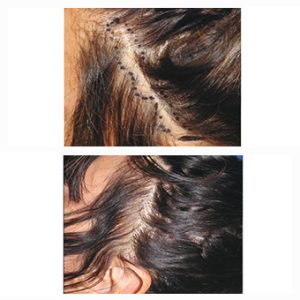
Step 1: Consultation and Scalp Assessment
Before any procedure is considered, a consultation is conducted to assess hair loss concerns, donor hair availability, and overall scalp health. During this appointment, the practitioner discusses expectations, suitability for FUE, and explains the limitations and potential outcomes of treatment.
This step helps determine whether FUE is an appropriate option and allows for a personalised treatment plan to be developed.
Step 2: Pre-Procedure Preparation
On the day of the procedure, the donor and recipient areas of the scalp are prepared. A local anaesthetic is administered to numb the treatment areas and support comfort throughout the procedure.
Hair in the donor area is trimmed if required, allowing for clearer visualisation and accurate follicle extraction.
Step 3: Follicle Harvesting
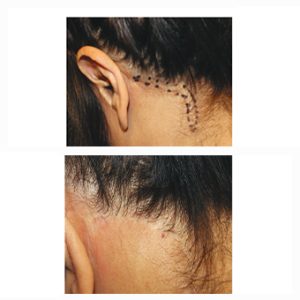
Once the area is numb, individual hair follicles are carefully selected from the donor area, typically at the back or sides of the scalp. A specialised micro-punch device is used to extract follicles one at a time, minimising disruption to surrounding tissue.
This step is carried out gradually and methodically to preserve follicle integrity and donor area appearance.
Step 4: Recipient Area Preparation
After harvesting, small micro-channels are created in the areas experiencing thinning or hair loss. These channels are placed with attention to direction, angle, and spacing, based on the natural hair growth pattern.
This preparation is important to support natural-looking placement and appropriate hair distribution.
Step 5: Follicle Implantation
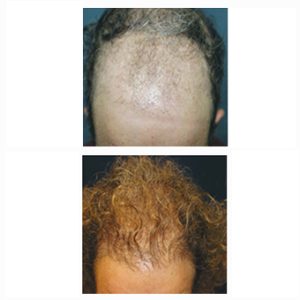
The harvested follicles are then placed into the prepared recipient sites. Each follicle is positioned individually to align with the surrounding hair and scalp characteristics.
The implantation process is performed with care to support graft survival and even distribution across the treatment area.
Step 6: Immediate Aftercare and Recovery Guidance
Once the procedure is complete, the scalp is cleaned and reviewed. Patients are provided with detailed aftercare instructions, including how to care for the scalp, manage mild swelling or redness, and protect the transplanted follicles during the early healing phase.
Follow-up appointments may be recommended to monitor healing and address any concerns during recovery.